Luzerne County's communities β from Wilkes-Barre and Hazleton to Nanticoke, Kingston, and Pittston, from the Wyoming Valley's post-coal neighborhoods to the county's rural mountain townships β deserve specialized trauma care delivered by Pennsylvania's most qualified traumatologists. With telehealth, that care comes directly to you.
Luzerne County sits in the heart of Pennsylvania's anthracite coal region, anchored by the Wyoming Valley and the cities of Wilkes-Barre and Hazleton. It is one of Pennsylvania's most populous counties outside the Philadelphia and Pittsburgh corridors, yet it carries a weight of compounded historical trauma that its mental health infrastructure has never adequately addressed. The coal industry that built the valley β that drew immigrant communities from Ireland, Poland, Italy, Ukraine, Lithuania, and across central and eastern Europe beginning in the mid-nineteenth century β collapsed over the course of the twentieth century, taking with it not just an economy but an entire structure of community identity, intergenerational expectation, and shared purpose that nothing has successfully replaced.
In the decades since, Luzerne County has experienced waves of additional trauma that have layered onto that original wound: the devastating 1972 Agnes Flood, which submerged Wilkes-Barre under water and displaced tens of thousands of residents; the Kids for Cash judicial scandal, in which two county judges sent thousands of juvenile defendants to private detention facilities in exchange for payments, inflicting institutional trauma on a generation of young people and their families and destroying public trust in the county's justice system; and a persistent opioid crisis that has cut across every neighborhood and every demographic in the county.
At Advanced Counseling and Research Services, our licensed trauma specialists bring evidence-based, certified trauma therapy directly to you through secure telehealth β so you can access the highest-quality care available in Pennsylvania without a long drive to Scranton or Philadelphia. From Wilkes-Barre to Hazleton, from Nanticoke to the county's mountain communities, we meet you where you are.
You don't have to leave Luzerne County to find a certified clinical trauma professional. Healing starts here.
The Weight of the Valley β Luzerne County's Layered Trauma Burden
Luzerne County's communities carry real and specific burdens that general counseling approaches rarely recognize or reach. Our certified clinical trauma professionals are trained to work with exactly this kind of complex, historically layered trauma:
The long shadow of the anthracite coal era: The coal industry shaped every dimension of Wyoming Valley life for over a century β its economy, its neighborhoods, its ethnic communities, its sense of identity and purpose. The collapse of deep mining over the twentieth century left behind communities whose entire reason for existing had been organized around a single industry that no longer needed them. The grief of that loss is multigenerational: the miners who lived it, their children who inherited its aftermath, and their grandchildren who grew up in communities still defined by what they used to be more than by what they are. That unspoken, community-wide grief β never clinically named or treated β remains a central feature of the psychological landscape across the Wyoming Valley's old mining boroughs from Nanticoke to Pittston.
The Agnes Flood of 1972 β a community trauma that echoes across generations: Hurricane Agnes brought catastrophic flooding to the Wyoming Valley in June 1972, inundating Wilkes-Barre and dozens of surrounding communities under water that reached the second floors of homes. Tens of thousands of residents were displaced. Entire neighborhoods were destroyed. The flood came less than two decades after the coal industry's worst decline and landed on communities already economically precarious and psychologically fragile. The acute trauma of that event β the loss of homes, possessions, neighborhoods, and a sense of safety that never fully returned β was never adequately treated clinically, and its effects have been passed down through families and communities in ways that are rarely recognized for what they are.
The Kids for Cash scandal β institutional trauma and the betrayal of children: Between 2003 and 2008, two Luzerne County judges β Mark Ciavarella and Michael Conahan β accepted payments from the developer of a private juvenile detention facility in exchange for sending thousands of juvenile defendants there, often for minor offenses, often without legal representation, and often for sentences far exceeding what any offense warranted. Thousands of young people and their families were subjected to a judicial system that had been corrupted and weaponized against the most vulnerable members of the county's communities. The psychological impact of that institutional betrayal β on the young people directly harmed, on their families, and on the broader community's relationship with public institutions β represents a form of collective trauma that is rarely acknowledged in clinical terms and has never been adequately treated at scale.
Post-industrial urban poverty and neighborhood disinvestment: Wilkes-Barre and Hazleton carry the accumulated weight of decades of post-industrial economic decline, population loss, and neighborhood disinvestment. The poverty, housing instability, limited economic opportunity, and social fragmentation that characterize distressed urban neighborhoods create chronic, traumatic stress that compounds with every passing generation. Children who grow up in conditions of concentrated urban poverty β with exposure to violence, food insecurity, unstable housing, and inadequate schools β carry adverse childhood experiences (ACEs) that without specialized clinical care persist as trauma throughout their lives.
The opioid and fentanyl crisis: Luzerne County has been among the hardest-hit counties in northeastern Pennsylvania by the opioid epidemic. The convergence of post-industrial despair, poverty, community fragmentation, and limited treatment access β across both the urban centers and the county's more rural communities β has created a crisis that cuts across every neighborhood and demographic. Every family touched by overdose carries grief, guilt, and unresolved trauma that requires specialized clinical attention. Recovery from substance use disorder consistently fails without addressing the underlying trauma that drives it.
Veteran and first responder trauma: Luzerne County has a significant veteran population drawn from working-class communities with strong traditions of military service. The county's urban fire, EMS, and police departments serve high-need communities with significant exposure to violence, overdose, and trauma β and the cumulative toll of that work, in agencies that rarely have adequate mental health support infrastructure, is significant. Telehealth provides access to specialized PTSD care for veterans and first responders who need it but who face barriers ranging from stigma to scheduling to the simple absence of local certified providers.
ACRS's certified clinical trauma professionals are trained specifically to work with complex, layered trauma β not just acute single-event PTSD. We meet you where you are.
Why Luzerne County Residents Choose ACRS
Personalized, Trauma-Informed Care β Delivered to Your Home
We work collaboratively with you to develop a Trauma-Informed Care Plan that addresses your specific needs and goals.
Specialized, compassionate PTSD care for Luzerne County veterans and active military families. You served β you deserve care that understands what you've been through.
First Responders
Luzerne County's firefighters, EMS crews, and law enforcement officers serve some of the most economically stressed communities in northeastern Pennsylvania β cities where overdose calls, domestic violence incidents, and exposure to violence are daily realities. Our trauma specialists understand the cumulative psychological toll of that work and provide confidential, effective telehealth care on your schedule, from your home.
Survivors of Domestic Violence
Individuals With Substance Use Disorders
Why Telehealth Works β Especially in Luzerne County
Luzerne County has a significant concentration of mental health providers relative to more rural counties, but the reality for many residents is that the providers available are not specialized in trauma, are not certified clinical trauma professionals, and carry waitlists measured in months.
Telehealth removes those barriers completely. With today's secure video technology, your session with an ACRS certified traumatologist is every bit as effective and connected as being in the same room. You see your therapist's face. They see yours. The therapeutic relationship is real β and so are the results.
You must be physically located in Pennsylvania during your telehealth session. Our Lancaster office is approximately 100β115 miles from Wilkes-Barre via Interstate 81 and Interstate 78 or the Northeast Extension of the Pennsylvania Turnpike β and you are always welcome to visit us in person if you prefer.
Here's why Luzerne County clients tell us they value telehealth:
No navigating unfamiliar cities or long drives on Interstate 81 or Route 309 before or after a difficult session.
Sessions fit around your work and family schedule β including evenings through Thursday.
You're in your own home β your own comfortable, private space.
You have access to Pennsylvania's best trauma specialists β certified clinical trauma professionals, not general therapists with long waitlists.
It works. Evidence-based telehealth therapy delivers outcomes comparable to in-person care for trauma, anxiety, and PTSD.
ACRS Treatment Modalities for Anxiety, Trauma, and PTSD
Brainspotting operates on the principle that where you look affects how you feel. A therapist helps you identify "brainspots" β eye positions linked to stored emotional experiences or trauma in the brain. By maintaining focus on the brainspot while fostering mindfulness and connection, the brain processes and releases unresolved emotions at a profound neurobiological level.
Brainspotting is effective for PTSD, Anxiety, Depression, chronic pain, and performance issues β and is particularly well-suited to the complex, multigenerational and historically layered trauma of Luzerne County communities shaped by industrial collapse, institutional betrayal, flood displacement, racial and ethnic marginalization, and the accumulated weight of experiences that have rarely had the clinical space to be fully seen or processed.
CBT is a short-term, goal-oriented psychotherapy that helps you identify and challenge unhelpful thought patterns and develop healthier coping mechanisms. It is highly effective for Anxiety, Depression, and PTSD β and its structured, practical approach resonates especially well with clients who prefer concrete, measurable progress over open-ended conversation.
DBT teaches four core skill sets β Mindfulness, Distress Tolerance, Emotion Regulation, and Interpersonal Effectiveness β to help you navigate overwhelming emotions and build healthier relationships. Especially effective for borderline personality disorder, self-harm, and suicidal ideation.
EMDR (Eye Movement Desensitization and Reprocessing) is a gold-standard treatment for trauma and PTSD. It involves recalling disturbing memories while focusing on bilateral stimulation, helping your brain reprocess traumatic memories and reduce their emotional intensity. Effective for PTSD, Anxiety, Phobias, and other trauma-related conditions.
Exposure and Response Prevention (ERP) Therapy
ERP is the gold-standard, evidence-based treatment for OCD and related Anxiety Disorders. It involves gradually exposing you to feared thoughts or situations while helping you resist compulsive responses β breaking the OCD cycle and restoring your sense of control.
PE is a type of CBT used to treat PTSD and Anxiety disorders. It involves gradually confronting feared memories and avoided situations in a safe environment. Through repeated exposure, the anxiety associated with trauma triggers diminishes over time β helping you reclaim your life.
Other Therapy Techniques
Narrative Therapy: Encourages you to tell your story, helping you understand and reclaim your own experiences β including the stories of post-coal community loss, flood displacement, institutional betrayal, and the quiet endurance of communities whose wounds have rarely been acknowledged by those with the clinical training to help heal them.
Somatic Experiencing: Focuses on your body's physical response to trauma and works to release stored tension β particularly valuable for clients whose chronic, historically deep trauma manifests as persistent physical symptoms or a sustained state of physiological hypervigilance that has come to feel normal.
Mindfulness and Relaxation Techniques: Meditation and deep breathing to help manage trauma-related stress and Anxiety β practices that can help Luzerne County residents find grounding and stability amid the ongoing pressures of life in a community still working to recover from its layered history.
Psychoeducation: Understanding trauma and its effects β including the patterns specific to community-wide disasters, institutional betrayal, racial and ethnic marginalization, post-industrial grief, and adverse childhood experiences β to help you make sense of your own history in a way that is accurate, compassionate, and clinically grounded.
Our Experienced Anxiety, Trauma, and PTSD Counselors
Our counselors are trained in Trauma-Informed Care and have extensive experience helping individuals heal from traumatic experiences β including the complex, historically deep, and multiply layered trauma that shapes life across Luzerne County's diverse communities, where the wounds are real, the need is urgent, and the specialized care has always been harder to find than it should be.
Choose Luzerne County's Anxiety, PTSD, and Trauma Experts
Specialized Expertise: Certified Traumatologists β not general counselors with long waitlists. We treat trauma, PTSD, and anxiety as our primary focus, with advanced training and credentials to match.
No Commute Required: Secure telehealth brings Pennsylvania's best trauma specialists directly to your home in Wilkes-Barre, Hazleton, Nanticoke, Kingston, Pittston, or anywhere in Luzerne County β regardless of neighborhood, transportation access, or distance from a provider's office.
Personalized Approach: We recognize that trauma in Luzerne County takes many forms β from the long shadow of the coal era to the Agnes Flood, from the Kids for Cash scandal, from urban poverty and violence to the opioid crisis. Your care plan reflects your unique experience.
Taking the first step toward healing takes real courage β especially when past experiences with institutions have given you reason to distrust the systems that are supposed to help. You deserve specialized care from providers who are genuinely qualified, genuinely interested in your story, and genuinely committed to your recovery.
Contact us today to set up a free, confidential 10-minute consultation. We'll listen, answer your questions, and help you find the right path forward.
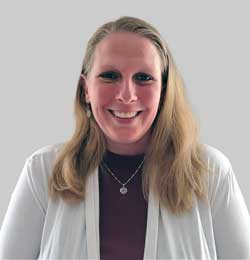
Cheryl has over 20 years of experience providing the highest-quality trauma and PTSD therapy to clients across Pennsylvania β including those in communities carrying layers of historical trauma that predate any individual's own experiences and that require a clinician who understands how community history, institutional betrayal, racial and economic marginalization, and personal suffering can interweave into something that needs to be approached with both clinical rigor and deep respect.
"Luzerne County has lived through so much β the loss of the coal era, the flood, Kids for Cash, the opioid crisis, communities being told they didn't belong. Every single person who has been shaped by those experiences deserves trauma care that truly understands the weight they carry. Telehealth makes it possible to bring that care directly to them."